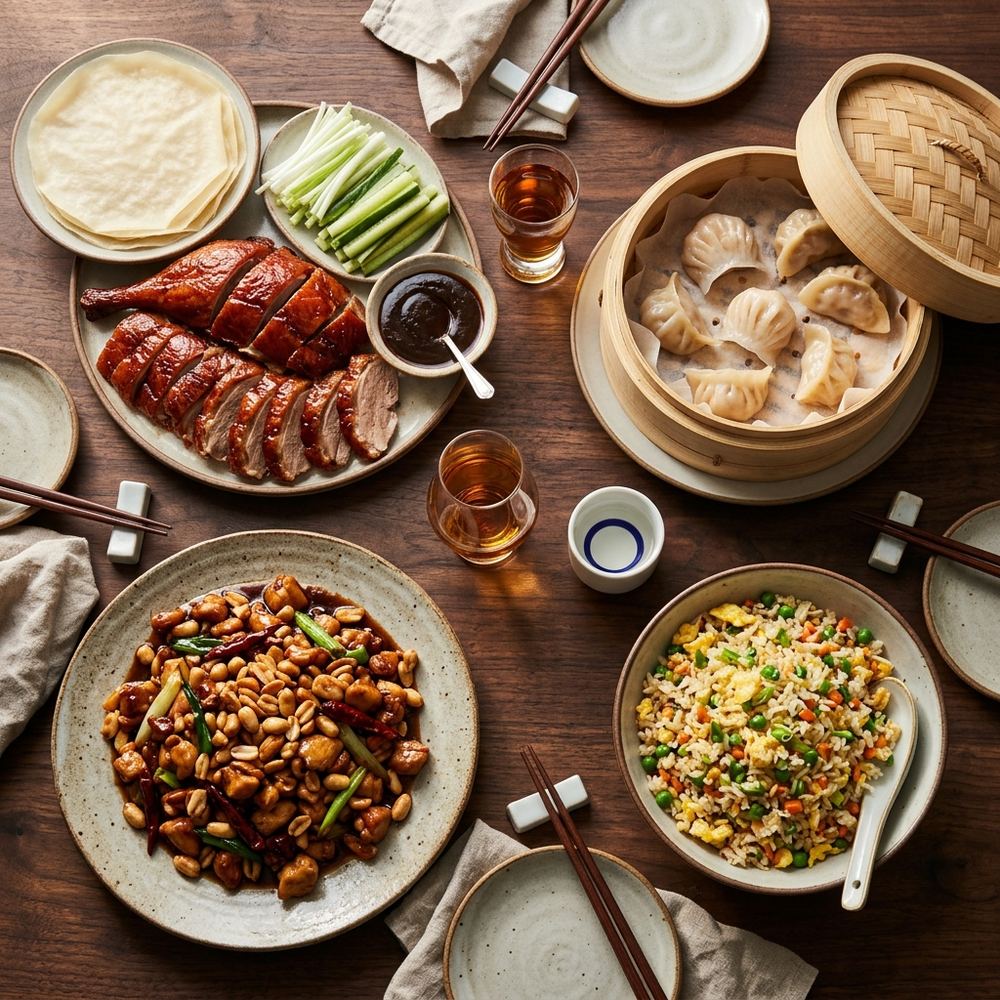
Sake pairing guide · 8 dishes
Best sake for Chinese food
Junmai Honjozo Koshu (Aged Sake)
Soy, sweet glazes, Sichuan heat and wok smoke. Sake's umami bridges soy naturally: Junmai and Honjozo with dumplings and rice, Nigori for Sichuan heat, and aged Koshu for hoisin, char siu and Peking duck.
The styles that work best
Junmai
Say it: JOON-my
Pure rice sake, no added alcohol. Round, savory, umami-rich. Shines warm.
Think: a medium-bodied white with savory depth.
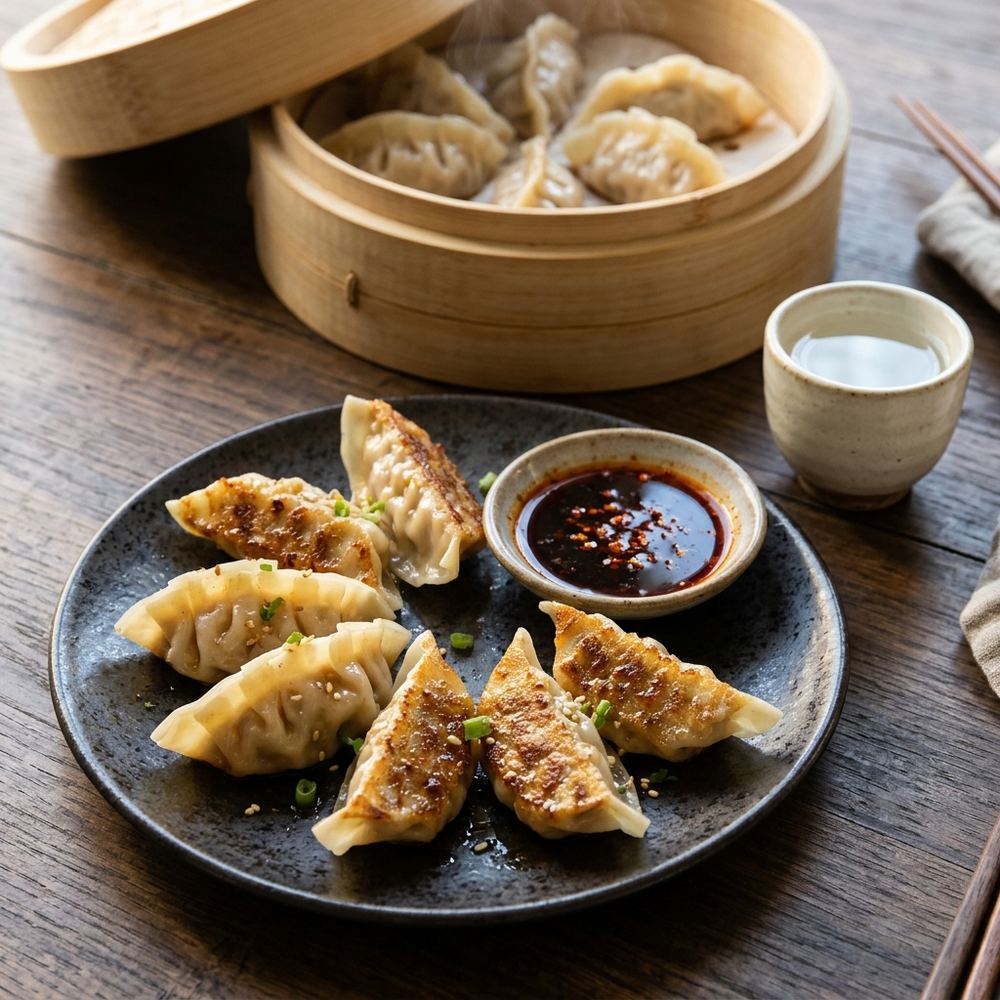
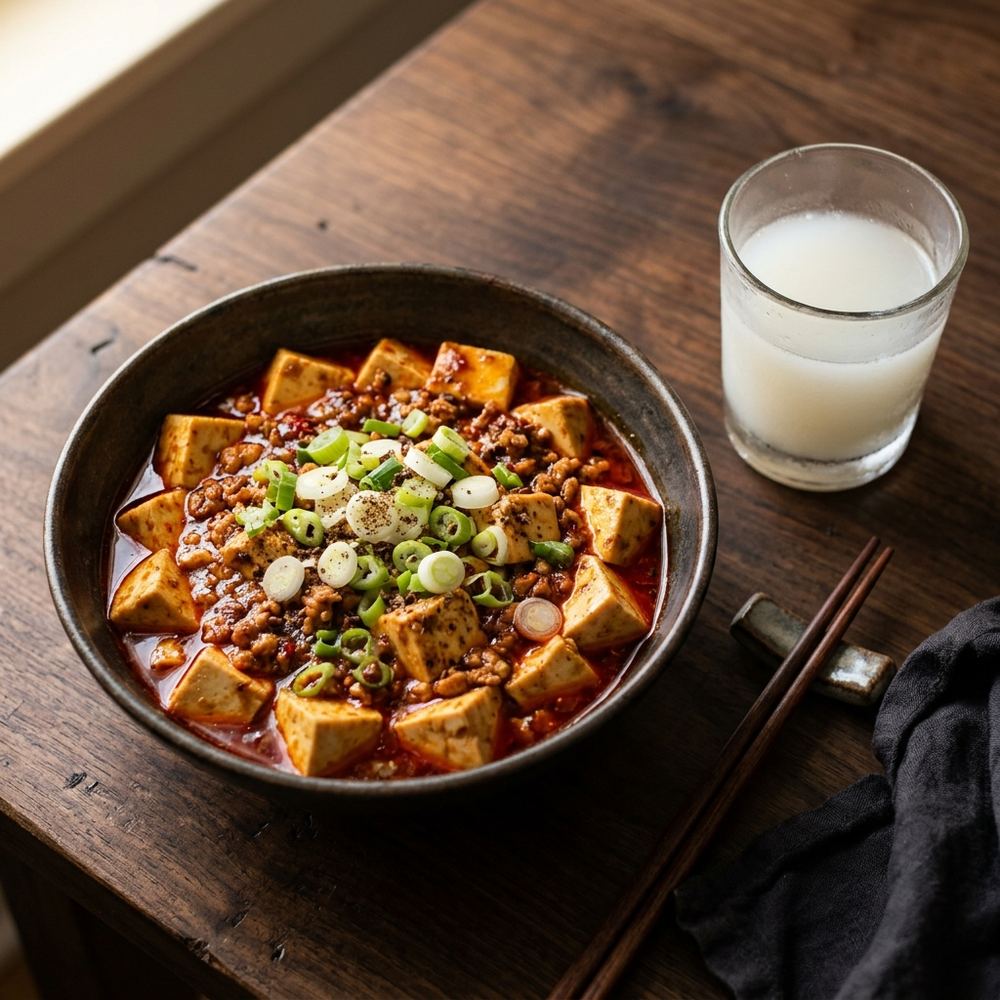
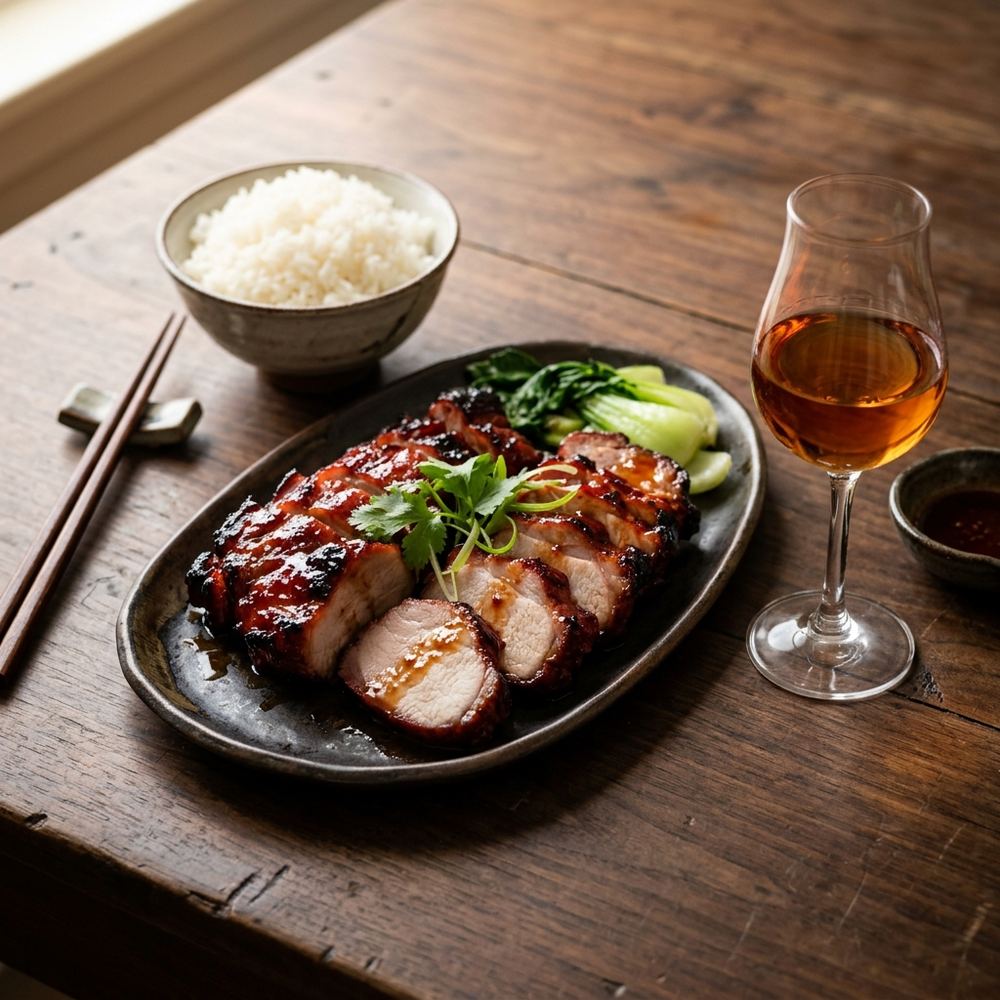
Try it with: Dumplings, Mapo Tofu, Char Siu (BBQ Pork)
Honjozo
Say it: HONE-joe-zoh
A touch of brewer's alcohol keeps it light and dry. Versatile, cold or warm.
Think: a crisp, dry Muscadet.
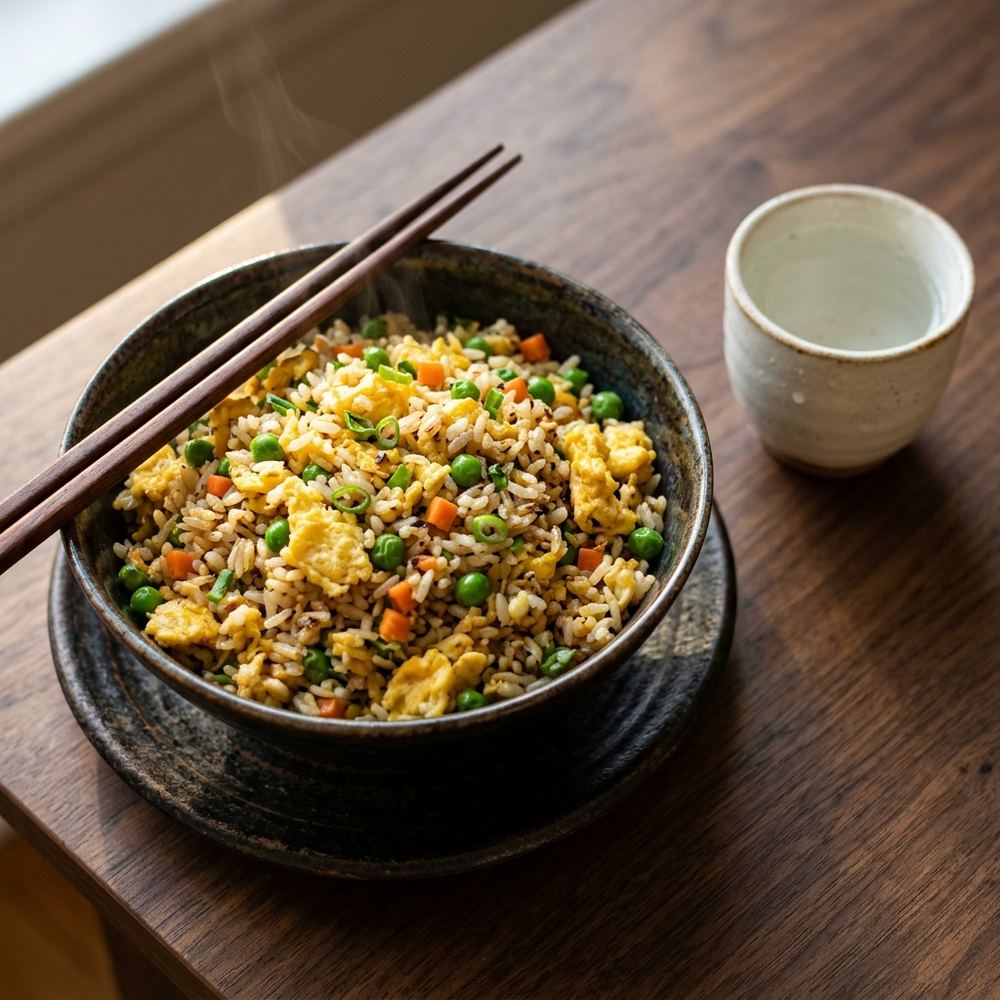
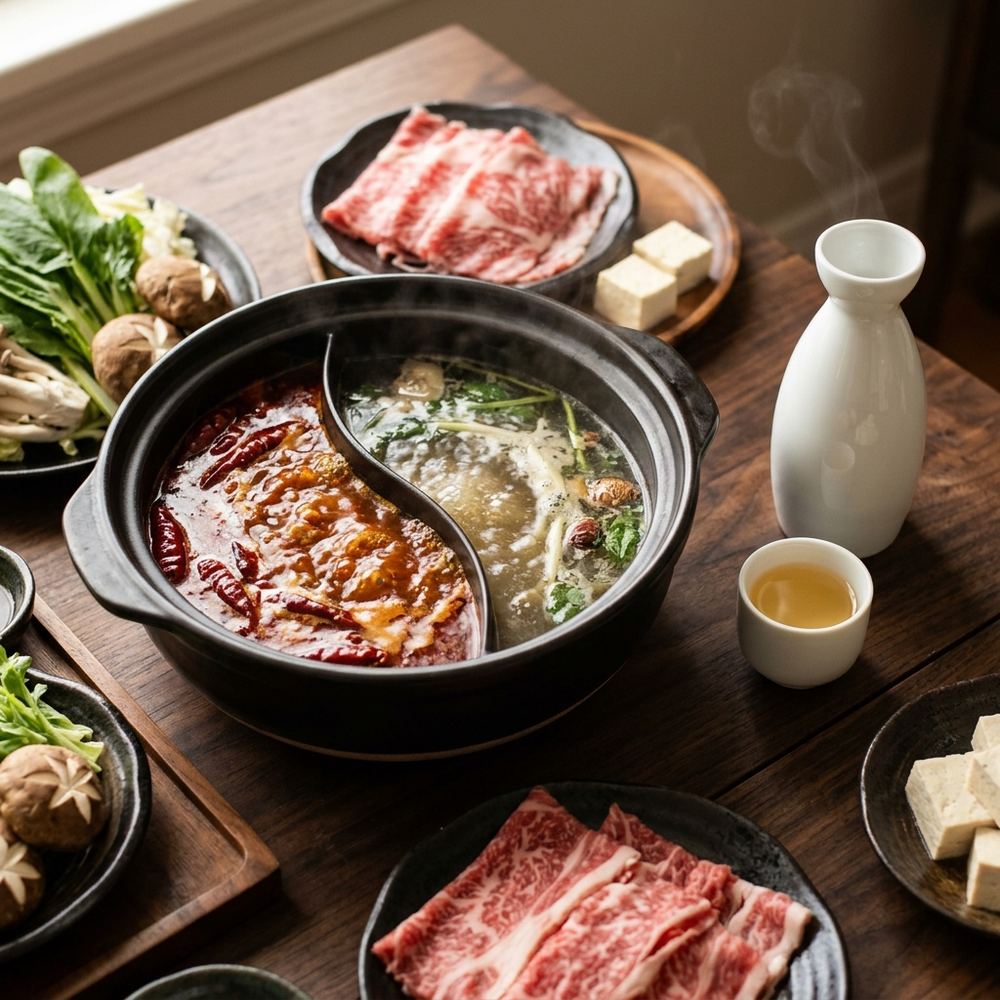
Try it with: Dumplings, Fried Rice, Hot Pot
Koshu (Aged Sake)
Say it: KOH-shoo
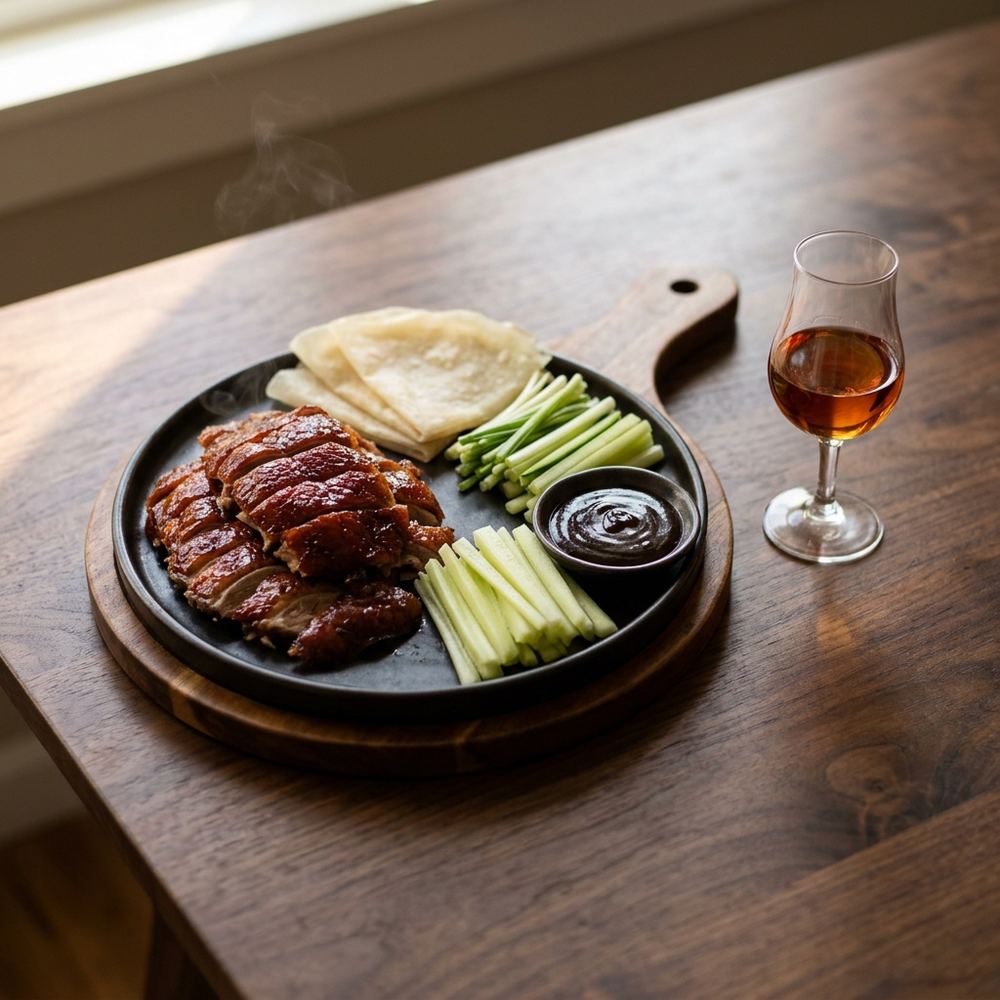
Aged for years: amber, nutty, caramel, soy notes. Stands up to bold flavors.
Think: Amontillado sherry or tawny port.
Try it with: Peking Duck, Char Siu (BBQ Pork)
Chinese pairings
Questions
What sake goes with Chinese food?
Junmai, Honjozo, Koshu (Aged Sake) are the most versatile. Soy, sweet glazes, Sichuan heat and wok smoke. Sake's umami bridges soy naturally: Junmai and Honjozo with dumplings and rice, Nigori for Sichuan heat, and aged Koshu for hoisin, char siu and Peking duck.
Should sake be served warm or cold with Chinese food?
Both. Lighter, aromatic styles are best chilled (41–50°F), while Junmai and Yamahai are often better warm (about 104°F) with richer dishes.
Which Chinese dishes are easiest to pair with sake?
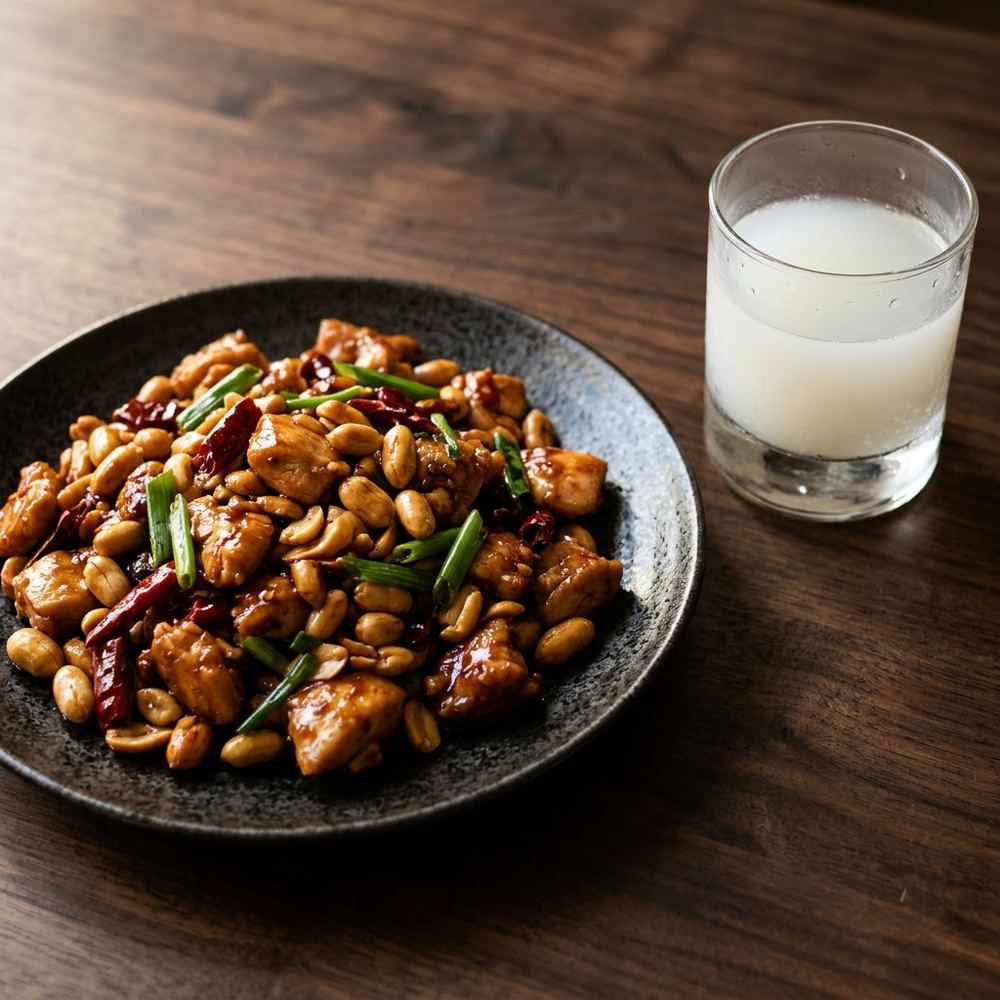
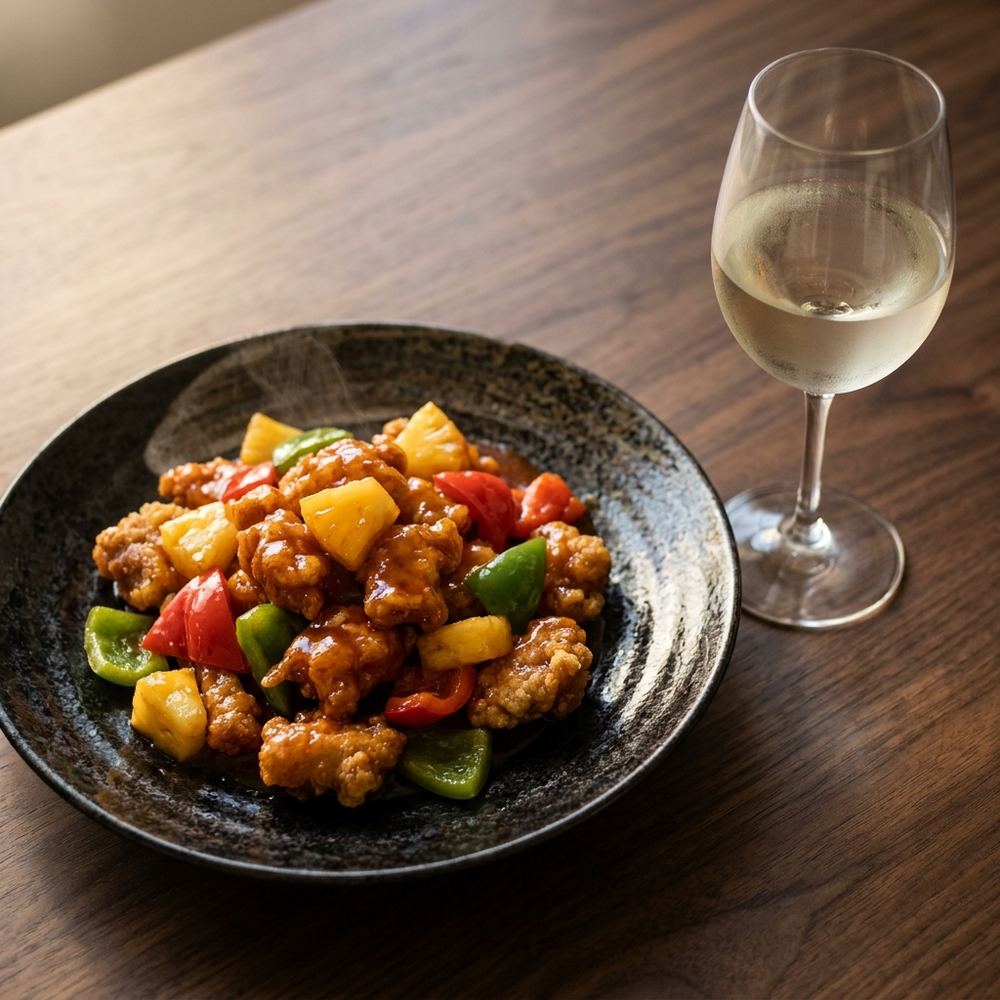
Peking Duck (Koshu (Aged Sake)), Dumplings (Honjozo), Kung Pao Chicken (Nigori), Mapo Tofu (Nigori).