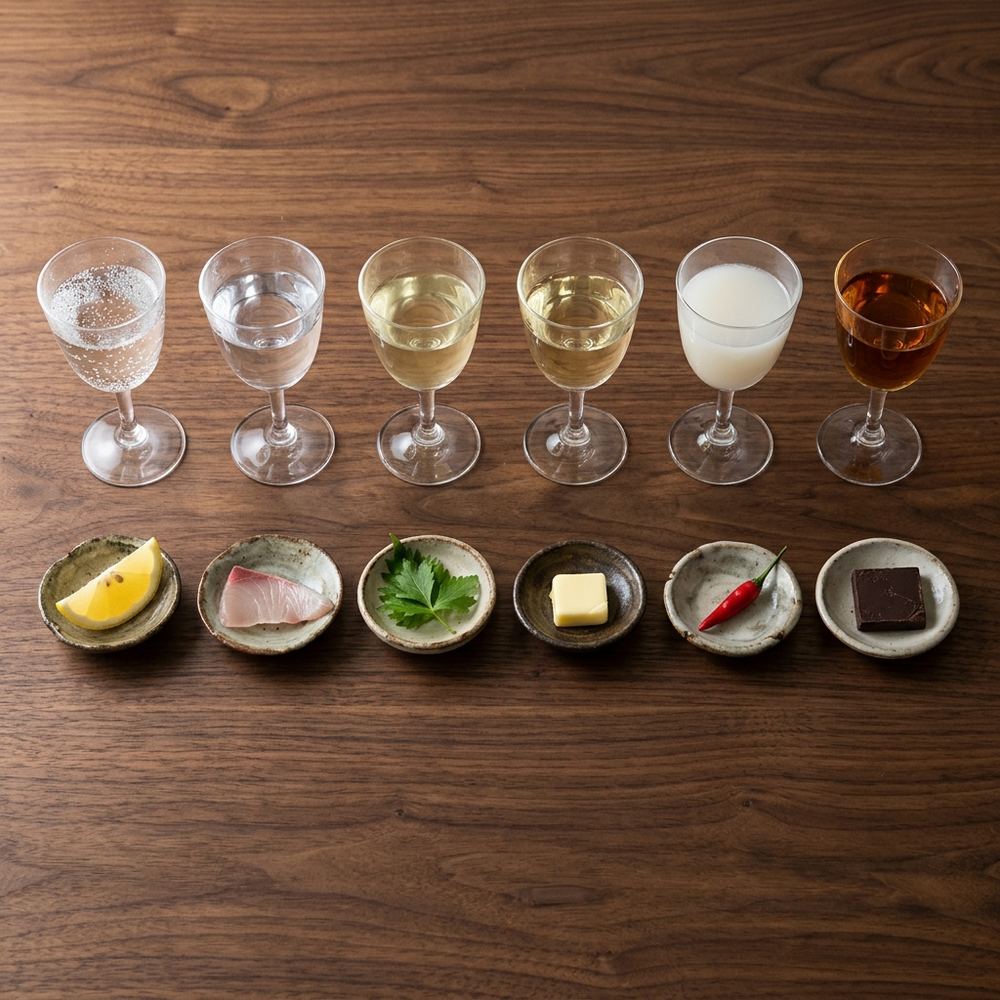
Our method
How we pair sake with food
Every pairing on SakePairing comes from seven principles, applied by sake style rather than brand, so any restaurant or home cook can use them with the bottles they can buy.
The seven principles
Match weight with weight
Delicate dishes need delicate sake, rich dishes need fuller sake. Raw fish goes with silky Daiginjo; braised short rib goes with Yamahai or aged Koshu.
Examples: Sashimi + Junmai Daiginjo · Ribeye + Yamahai
Acidity cuts fat
Sake has less acidity than wine, so for fatty or tomato-based dishes we pick the higher-acid styles: Yamahai and Kimoto, made with traditional starters that build lactic acidity.
Examples: Pizza + Yamahai · Carbonara + Yamahai
Sweetness and creaminess tame heat
Alcohol makes chili burn hotter. Creamy, lightly sweet Nigori and aromatic, off-dry Ginjo calm spice instead of fanning it.
Examples: Vindaloo + Nigori · Kung pao + Nigori
Bubbles and dryness cut fried food
Carbonation and a dry finish scrub oil off the palate, the same reason beer and Champagne work with fried food.
Examples: Fried chicken + Sparkling · Tempura + Honjozo
Umami echoes umami
Sake is rich in amino acids, so it amplifies savory foods: soy, mushrooms, broth, aged cheese and cured meat. This is where sake beats most wines.
Examples: Pho + warm Junmai · Mushroom risotto + Junmai
Aged and sweet for bold desserts
A dessert sake should be at least as sweet as the dessert. Aged Koshu brings caramel and nuts; honeyed Kijoshu suits custard.
Examples: Chocolate cake + Koshu · Crème brûlée + Kijoshu
Temperature changes the pairing
Chilling sharpens aromatic styles for light food; warming Junmai or Yamahai to about 104°F softens them and brings out umami for rich, savory dishes.
Examples: Chilled Ginjo with ceviche · Warm Junmai with ramen
The style map
| Style | Tastes like | Serve | Top pick for |
|---|---|---|---|
| Sparkling Sake AH-wah sah-keh | Prosecco or Cava | Chilled · 41–50°F | Fried Chicken, Fish & Chips, Banh Mi, Tempura |
| Junmai Daiginjo joon-my DIE-gheen-jo | a fine white Burgundy, without the oak | Chilled · 41–50°F | Sushi & Sashimi, Seared Scallops |
| Namazake NAH-mah-zah-keh | a zesty Vinho Verde | Chilled · 41–50°F | Ceviche, Goat Cheese & Beet Salad, Fish Tacos, Guacamole & Chips |
| Junmai Ginjo joon-my GHEEN-jo | an aromatic Sauvignon Blanc or Albariño | Chilled · 41–50°F | Lobster Roll, Grilled Salmon, Roast Chicken, Crab Cakes |
| Honjozo HONE-joe-zoh | a crisp, dry Muscadet | Chilled · 41–50°F | Oysters on the Half Shell, Caesar Salad, Dumplings, Hot Dog |
| Junmai JOON-my | a medium-bodied white with savory depth | Room temp · 59–68°F | Cheeseburger, Pho, Yakitori (Tare), Pulled Pork Sandwich |
| Nigori nee-GOH-ree | an off-dry Riesling with a creamy texture | Chilled · 41–50°F | Tacos al Pastor, Thai Green Curry, Butter Chicken, Buffalo Wings |
| Yamahai / Kimoto yah-mah-HIGH / kee-MOH-toh | a rich Chardonnay or a light red | Warm · ~104°F | Ribeye Steak, Mac & Cheese, Carne Asada, Margherita Pizza |
| Koshu (Aged Sake) KOH-shoo | Amontillado sherry or tawny port | Room temp · 59–68°F | BBQ Ribs, Charcuterie & Aged Cheese, Peking Duck, Chocolate Lava Cake |
| Kijoshu (Dessert Sake) kee-JOE-shoo | Sauternes | Lightly cool · 50–59°F | Crème Brûlée |
Where our pairings come from
The SakePairing team writes every pairing from widely used sake and wine pairing principles, like the seven above, and checks it against each dish's dominant flavors: fat, acid, heat, sweetness, salt and umami.
Pairings are a starting point, not a rule. Producers within one style taste different, so taste and adjust. We refine pairings with feedback from the restaurants in our pilot and from the dishes people search for. More about us.