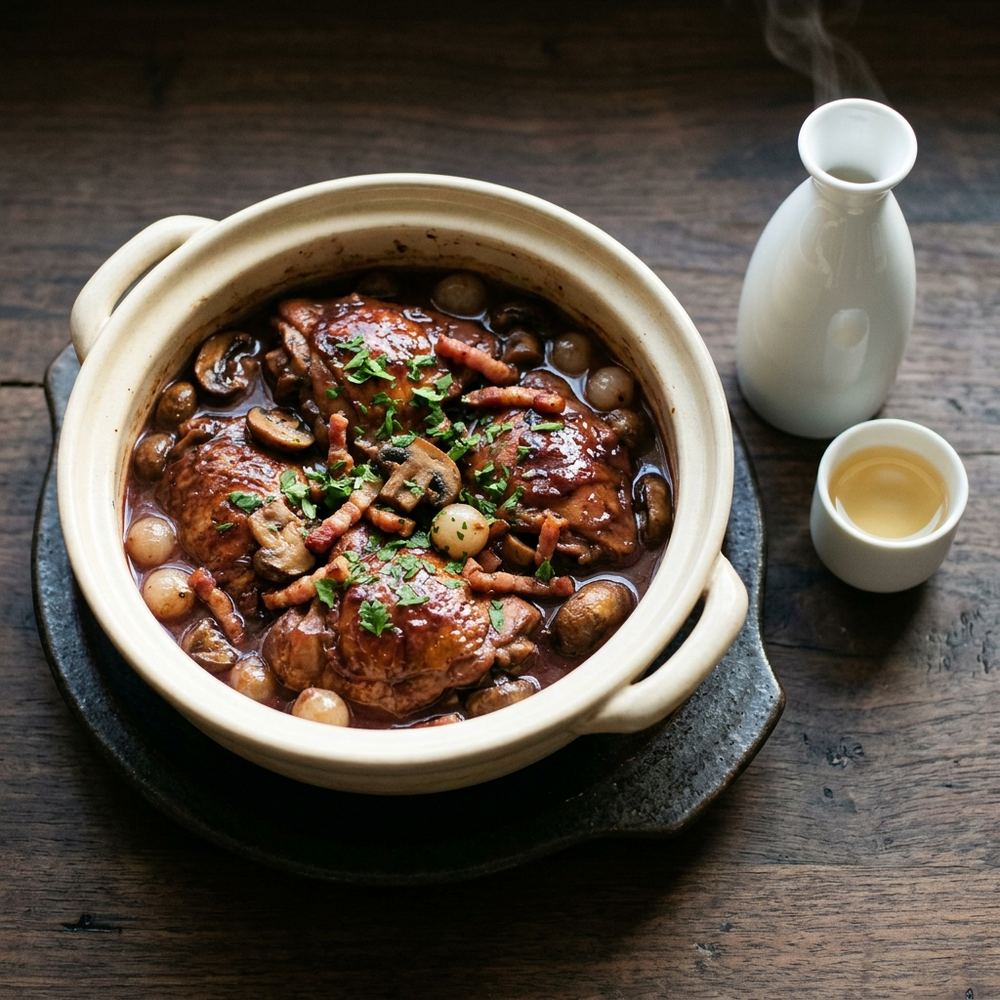
French · Sake pairing
Best sake for Coq au Vin
Yamahai / Kimoto, warm.
Earthy depth for a red-wine braise and mushrooms.
Also great: Koshu (Aged Sake) (room temp). Aged notes echo bacon and slow-cooked sauce.
Why these sakes work
Yamahai / Kimoto
Earthy depth for a red-wine braise and mushrooms.
Think: a rich Chardonnay or a light red. Traditional methods bring higher acidity and gamey umami. Loves rich food.
Koshu (Aged Sake)
Aged notes echo bacon and slow-cooked sauce.
Think: Amontillado sherry or tawny port. Aged for years: amber, nutty, caramel, soy notes. Stands up to bold flavors.
The principle: Butter, cream, wine sauces and long braises. Lactic, high-acid Yamahai matches butter and cream the way an oaked Chardonnay does. Aged Koshu echoes caramelized onion, duck and burnt sugar, and sparkling sake lifts pastry and brunch dishes. How we pair →
How to serve
- Yamahai / Kimoto: Warm · ~104°F, in a small cup (ochoko).
- Koshu (Aged Sake): Room temp · 59–68°F, in a small tulip glass.
- How much: a 2–3 oz pour per person is plenty alongside the dish. A 720 ml bottle gives about 10 pours.
- Warming sake: stand the flask in hot (not boiling) water for 2–3 minutes until it feels warm to the touch, about 104°F.
Questions
What sake goes with Coq au Vin?
Yamahai / Kimoto is the top pick: earthy depth for a red-wine braise and mushrooms. Koshu (Aged Sake) is a great alternative: aged notes echo bacon and slow-cooked sauce.
Should sake be served warm or cold with Coq au Vin?
Serve Yamahai / Kimoto warm (~104°F) and Koshu (Aged Sake) room temp (59–68°F).
What wine is Yamahai / Kimoto like?
It drinks like a rich Chardonnay or a light red. Traditional methods bring higher acidity and gamey umami. Loves rich food.
More French pairings