Korean · Sake pairing
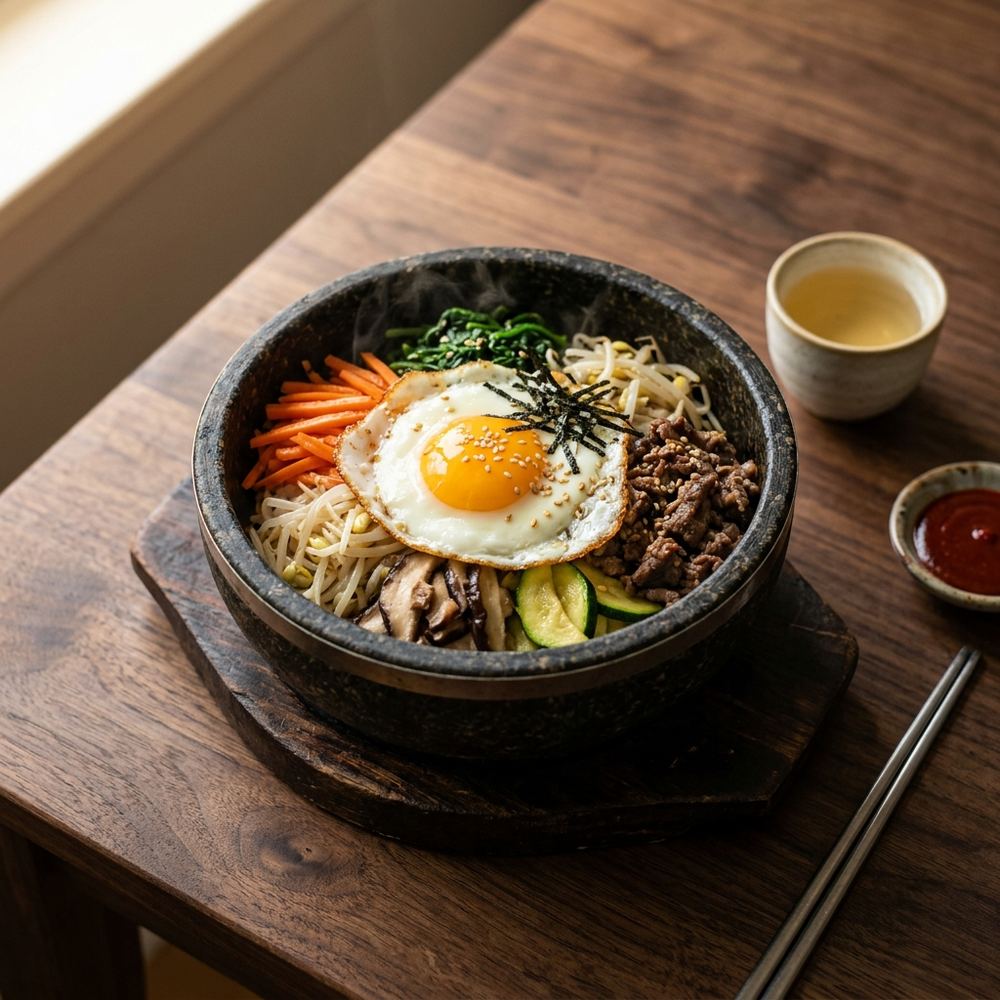
Best sake for Bibimbap
Junmai, room temp.
Rice meets rice: savory body for veggies and egg.
Also great: Namazake (chilled). Fresh zip for sesame and gochujang.
Why these sakes work
Junmai
Rice meets rice: savory body for veggies and egg.
Think: a medium-bodied white with savory depth. Pure rice sake, no added alcohol. Round, savory, umami-rich. Shines warm.
Namazake
Fresh zip for sesame and gochujang.
Think: a zesty Vinho Verde. Unpasteurized, fresh and zippy. Keep refrigerated, serve cold.
The principle: Gochujang heat, garlic, sweet-soy marinades and fermented kimchi. Yamahai stands up to galbi and bulgogi, Nigori soothes spice, and warm Junmai rounds out stews. How we pair →
How to serve
- Junmai: Room temp · 59–68°F, in a small cup (ochoko).
- Namazake: Chilled · 41–50°F, in a wine glass.
- How much: a 2–3 oz pour per person is plenty alongside the dish. A 720 ml bottle gives about 10 pours.
Questions
What sake goes with Bibimbap?
Junmai is the top pick: rice meets rice: savory body for veggies and egg. Namazake is a great alternative: fresh zip for sesame and gochujang.
Should sake be served warm or cold with Bibimbap?
Serve Junmai room temp (59–68°F) and Namazake chilled (41–50°F).
What wine is Junmai like?
It drinks like a medium-bodied white with savory depth. Pure rice sake, no added alcohol. Round, savory, umami-rich. Shines warm.
More Korean pairings